IGA ECOSORP
Dynamic Gas and Vapor Sorption Analyzer
Dedicated gravimetric analyzer for carbon capture applications
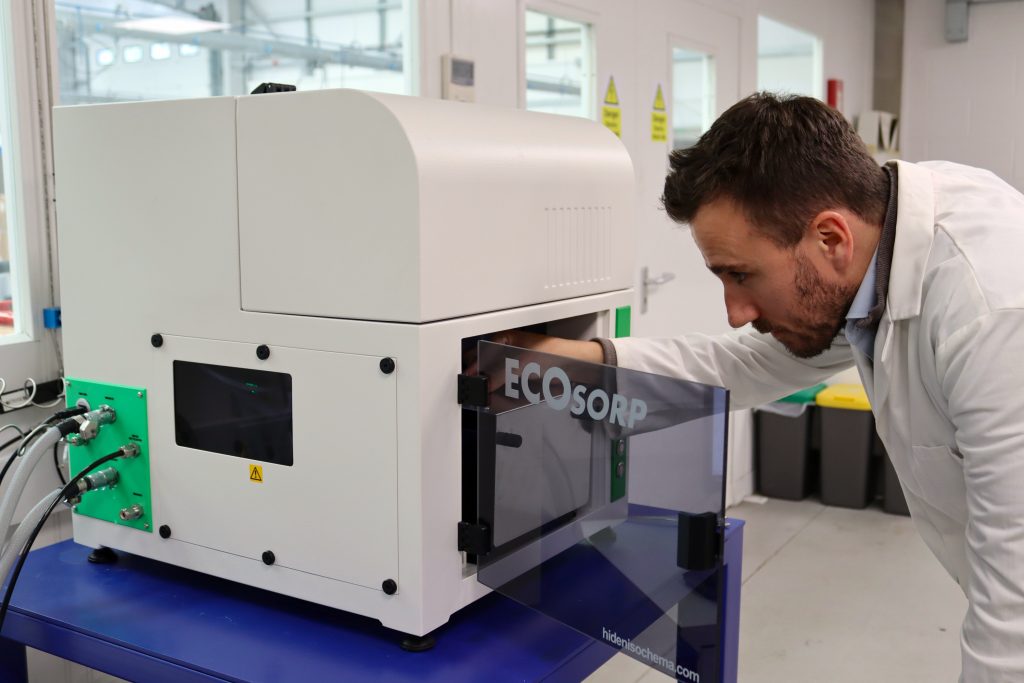
Dedicated gravimetric analyzer for carbon capture applications
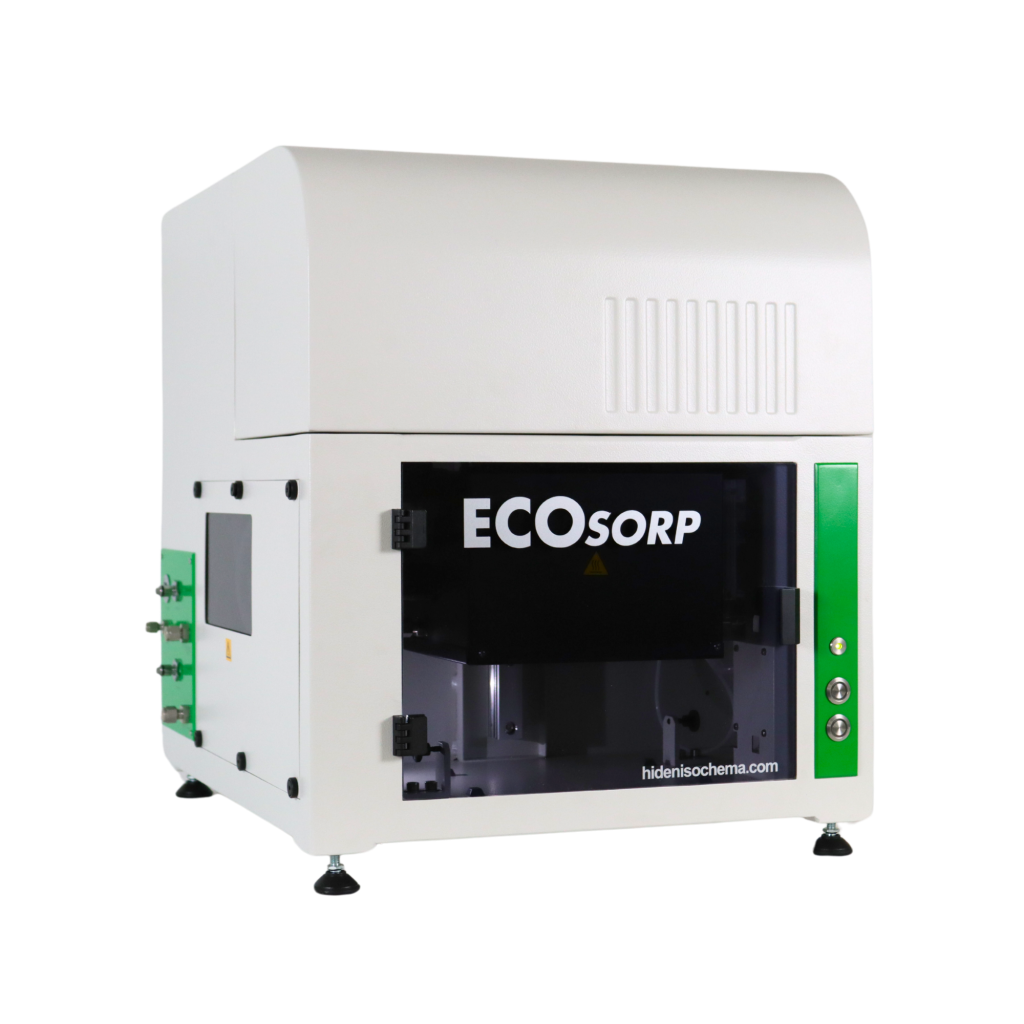
A dedicated gravimetric analyzer for carbon capture applications, the IGA ECOsorp allows candidate sorbents to be characterized under conditions relevant to carbon capture, utilisation and storage, with a focus on direct air capture (DAC) and post-combustion capture (PCC) conditions.
Many different material types are used in carbon capture applications, and the IGA ECOsorp is equipped to characterise all types – ranging from liquid-phase solvents, solid-phase adsorbents, and membranes:
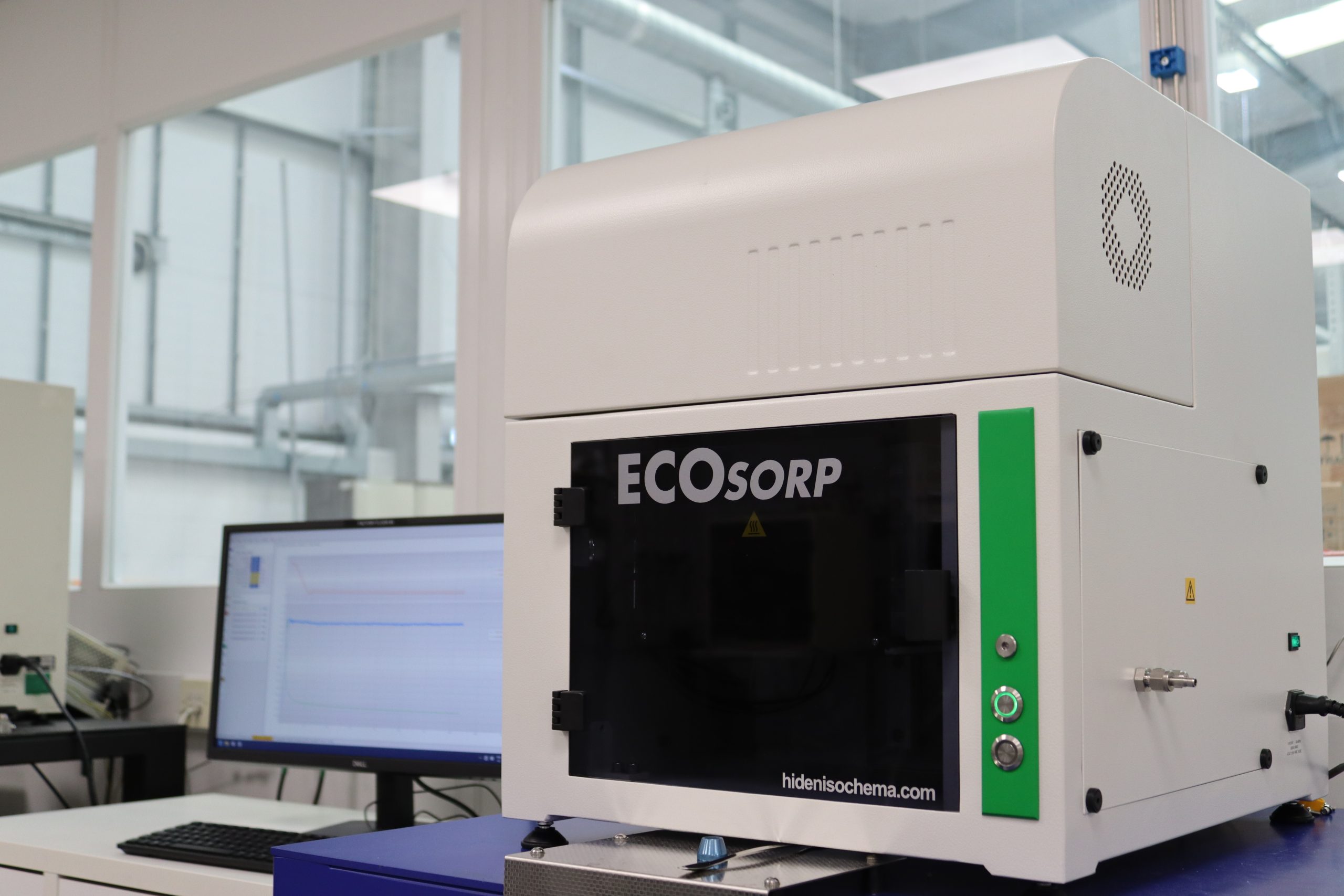
The IGA ECOsorp is a new benchtop sorption analyzer for carbon capture research. Combining high resolution gravimetric water sorption with precise CO₂ gas sorption under dynamic flow conditions, the IGA ECOsorp offers an affordable and practical solution for assessment of candidate carbon capture sorbent performance across Direct Air Capture (DAC) and Post Combustion Capture (PCC) conditions.
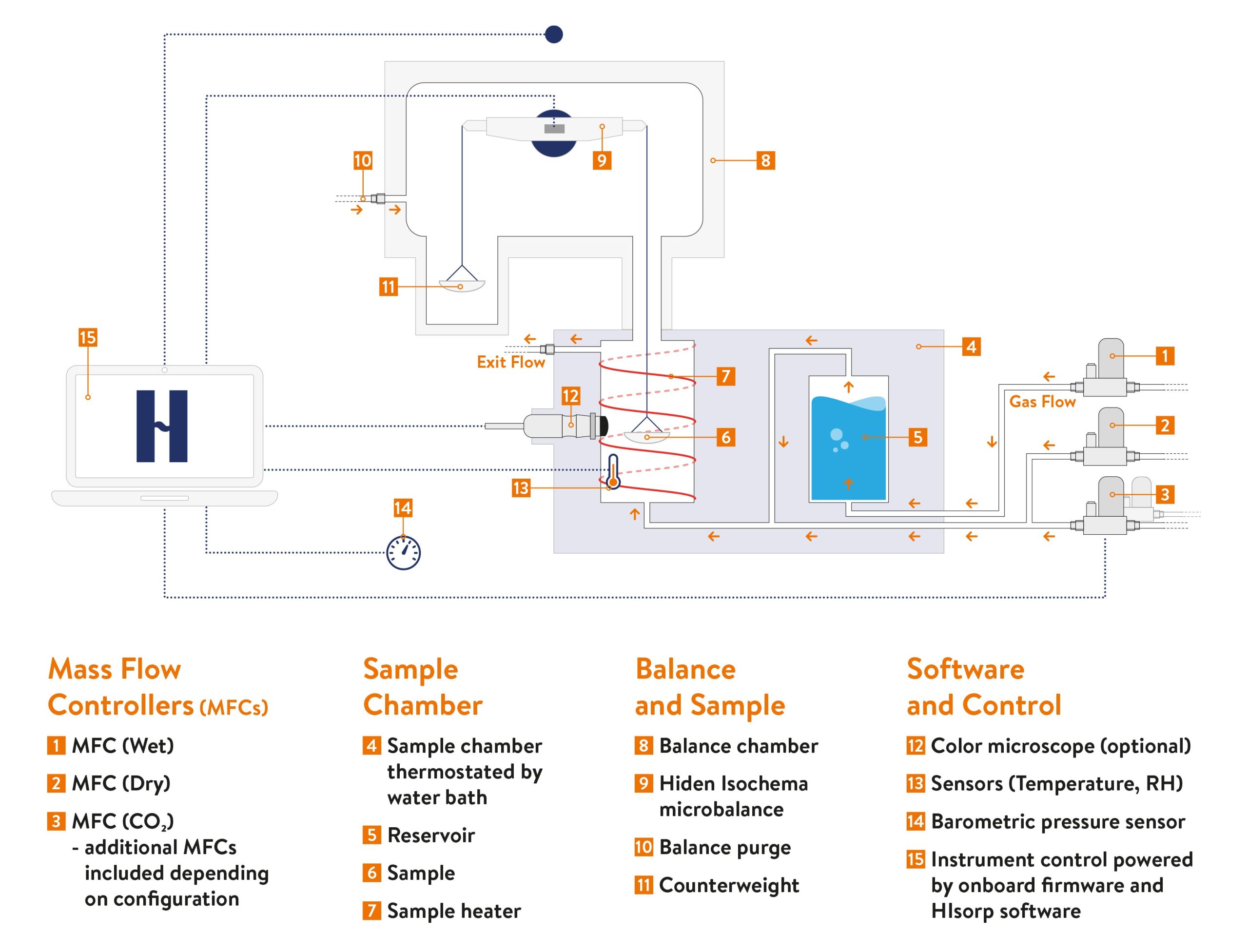
Carbon dioxide and water vapor concentrations are individually controlled, with CO₂ partial pressures from 100 ppm upwards and independent humidity regulation allowing accurate assessment of material performance. Measurements are fully programmable and can be made at temperatures from 5 to 85 °C, with an integrated heater allowing in situ degassing, activation and regeneration at temperatures up to 350 °C.
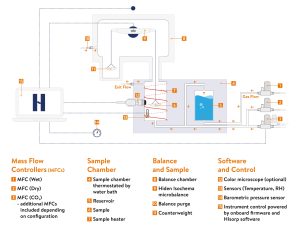
The IGA ECOsorp’s measurement chamber houses the sample reactor, vapor generator and humidity sensor, delivering tightly regulated 5 to 85 °C control with ±0.01 °C stability for long‑duration reproducibility. It also provides the broadest temperature–humidity operating space among conventional DVS systems for CCUS, enabling safe, stable operation up to 98 %RH at 80 °C and 85 %RH at 85 °C through its robust humidity‑generation and thermal‑management architecture.
The IGA ECOsorp also includes an integrated heater with a maximum temperature of 350 °C as standard, enabling: sample drying and activation, thermal regeneration, thermal desorption and TGA type experiments.
The IGA ECOsorp achieves unmatched flexibility in gas control with a four inlet system, allowing CO₂ partial pressures from as low as 100 ppm (0.01%) up to 100% – all from standard pure gas supplies.
A built-in barometric pressure sensor is used to convert concentration into true partial pressure. This unique barometric compensation technology automatically adjusts CO₂ delivery in real time, ensuring accurate measurements regardless of ambient pressure fluctuations.
Every IGA ECOsorp uses a high precision microbalance engineered by Hiden Isochema to record sample mass changes as the environmental conditions change. Renowned for long-term stability and exceptional sensitivity, it enables detection of microgram-level weight changes. With balance temperature controlled separately from measurement temperature, you can trust every data point.
HIsorp is the all-in-one platform for sorption analysis, covering everything from method setup to deep data insights. Fully supported and Windows compatible, it’s built for reliability and future ready performance.
Flexibility: Create multi-step routines for isothermal sorption, thermal desorption, cyclic testing and more.
Advanced control: Configure multi-step routines with full control over temperature, vapor pressure and flow rates.
Analysis tools: Real-time isotherm updates, kinetic modelling, surface area calculations, thermodynamic evaluations and more.
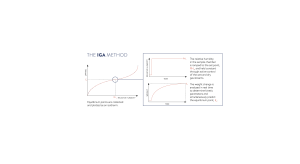
Real-time kinetic analysis is achieved through continuous monitoring of weight-time data. The software models this data and predicts the trend toward equilibrium, which is clearly displayed on-screen. Objective equilibrium criteria are automatically applied to determine the optimal point to proceed – ensuring reliable, repeatable measurements.